


If you’re reading this having set out with me on the Haught journey right back at the start – the very first post – thank you. You’ll no doubt remember that I long ago compared modern journeys to the wonderful (although admittedly futile) adventures that took place in the 1970s Japanese TV series, Monkey. (I think of you, dear reader, as my loyal, lascivious and temperamental Pigsy.)

You’ll no doubt also remember that I have already removed obstacles on your path to better in-office (and, let’s be honest, in-life) communication by revealing to you most useful words in the English language.
In the category of Most Outstanding Noun, the incomparable “learnings”.
In the category of Most Outstanding Adjective, the unimpeachable “strategic”.
And now for the blue riband Most Outstanding Verb.
By far the best verb in the English language today is “drive”.
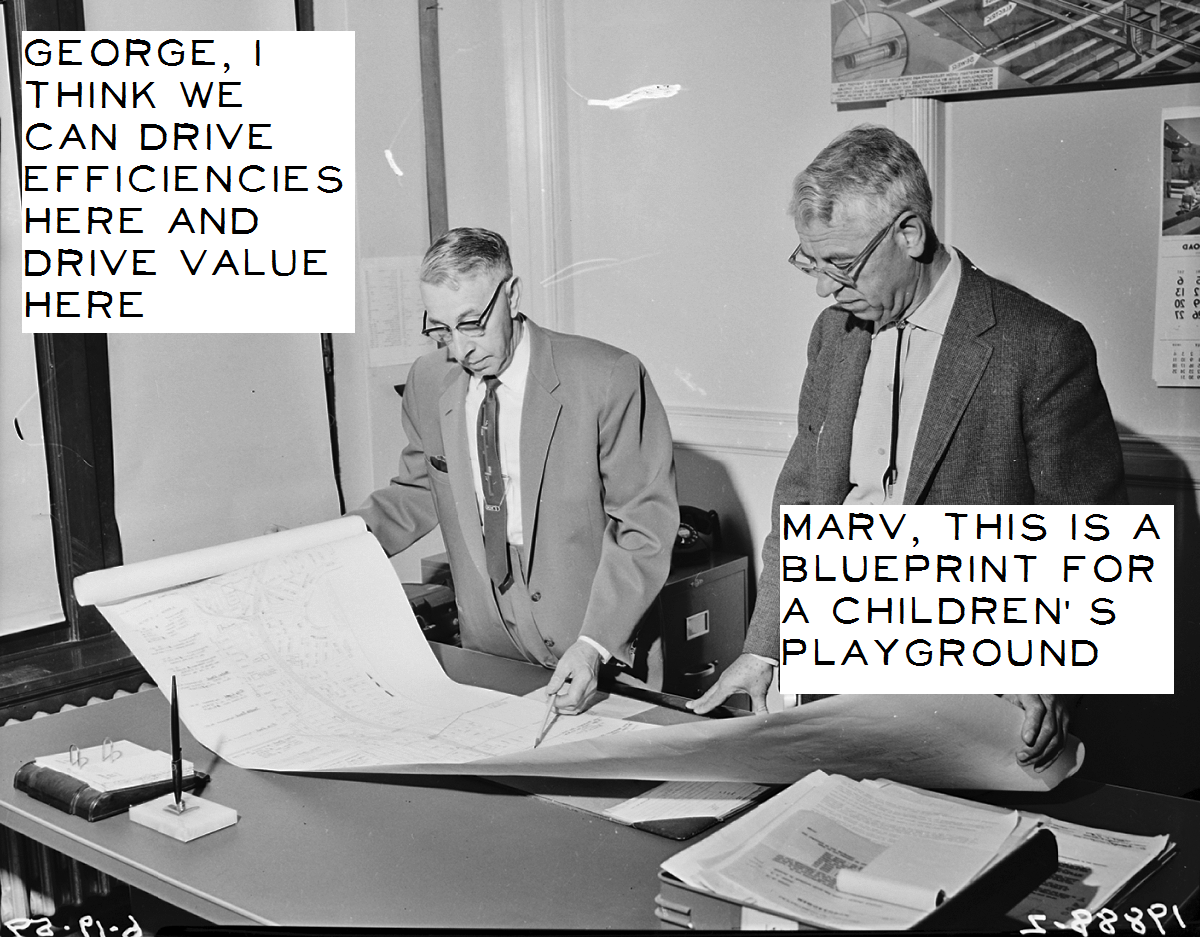
Where only a few short years ago – a decade at the most – you could drive a car, a truck, a train, a trotting horse and that was about it, today you can can put drive in front of nearly any noun and no colleague worth their corporate salt will bat an eyelid.
You can drive value to shareholders, drive visitors to your website, drive inputs, outputs and throughputs. You can drive impact, engagement, progress, standards, retention, leads, change, stability, investment and transactions.
You can drive practically anything, and that makes the word a hugely valuable linguistic commodity.
Say you’re in an incredibly important meeting at work and you suddenly feel the urge to clear your throat, but you know there are sensitive senior management souls present who won’t take kindly to such a sound. In times gone by you’d have had to deny yourself a normal bodily function for the remainder of the session so as not to harm your chances of career progression. Not these days. In 2015 you can blast a frog-sized particle from your lungs into your mouth with the heedlessness of a particularly crass camel and so long as you go on to tell the assembled crowd you were “just driving sputum going forward” you’ll be as right as rain.
In the same vein, you can drive flatus, drive foul toilet miasma, drive maintenance cupboard hijinks, drive indolence and drive fomentation of mutiny.
Think I’m being silly with those last few?
Well, go on, Pigsy, test my theory yourself. At work, match drive with the most unlikely noun you can think of – egalitarianism, spaghetti, molluscs, angst, marmalade, butane, ambrosia – and see if anyone pulls you up.
An edited version of this article first appeared in the MyCareer section of The Age and Sydney Morning Herald.
You can read Benign to Five in those papers every Saturday, and if you miss it, you can look it up online in the BusinessDay section of The Age, the Sydney Morning Herald, The Canberra Times, WAToday and Brisbane Times. (I now wankishly call myself a “syndicated columnist” on my CV.)
Read more Haught newspaper columns
Thaught of the day
“Driving marmalade” is no more ridiculous than the well-established “driving outcomes”.